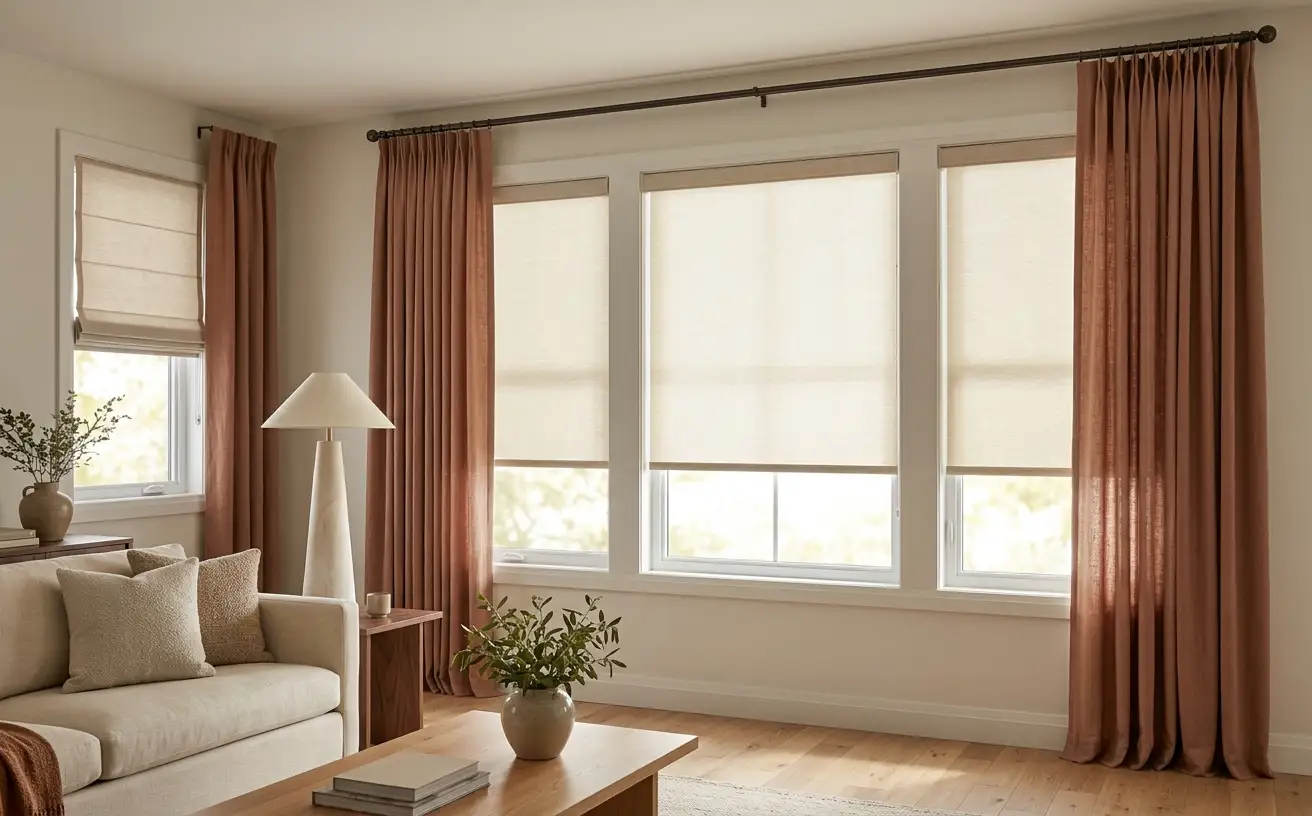
The rooms that stop you in a magazine almost never rely on a single window treatment. They layer. A functional blind or shade handles the light and privacy, and a soft panel of fabric frames the window and warms the whole space. Layering is the trick designers use to make a room feel finished, and it is easier to get right than it looks. Here is how to combine custom drapery with your hard treatments, one layer at a time.
Why Designers Layer Window Treatments
Layering solves several problems at once. You gain flexible light control, since you can adjust the shade during the day and draw the drapery for full coverage at night. You add softness, because fabric panels break up the hard lines of a window and absorb sound in echoey rooms. And you gain comfort: heavier drapery panels add a real insulating layer over glass, which improves energy efficiency in Ottawa's cold winters and hot summers. One layer rarely does all of this well, but two layers working together can.
Layer One: The Blind or Shade That Does the Work
Start with the functional layer, because it does the daily job of managing light and privacy. This is where you choose from the shades and blinds families based on how the room is used. For bedrooms and media rooms, a cellular option like Duette honeycomb shades adds insulation along with light control. For a clean, minimal base under drapery, designer roller shades disappear when raised and let the fabric take center stage. Choose this layer first, then let the drapery complement it.
Layer Two: Drapery for Softness and Warmth
Drapery is the styling layer. It frames the window, adds color and texture, and softens everything around it. You can specify panels as stationary, framing the window without operating, or as traversing drapery that opens and closes for real coverage. A room-darkening liner turns ordinary panels into a serious light barrier for bedrooms. And if you love the look of sheer fabric but still want privacy control underneath, layering drapery over Silhouette sheers gives you soft, diffused daylight by day and full closure at night.
Pairing Drapery With Wood and Faux Wood Blinds
Layering is not only for shades. Drapery pairs beautifully with horizontal blinds, where the crisp slats give structure and the fabric adds warmth on either side. Wood blinds bring natural grain and a classic feel that suits traditional and transitional rooms, while faux wood blinds deliver the same look with better moisture resistance for kitchens and bathrooms. In both cases, stationary drapery panels at the sides frame the window and hide the blind's brackets for a tidy, custom finish.
Layering for Sliding Doors and Wide Windows
Large expanses of glass are where layering earns its keep. On a sliding patio door, Luminette privacy sheers traverse sideways and give soft light with rotating vane privacy, and a drapery panel at each end frames the opening without blocking the path. The same approach works on picture windows and walls of glass. For a deeper look at covering these tricky openings, our guide to sliding glass doors walks through the options in more detail.
Getting the Proportions Right
Proportion is what separates a layered look that feels intentional from one that feels cluttered. Mount drapery hardware high and wide, above the window frame and past its edges, so panels clear the glass and the window looks larger. Let panels reach the floor with a clean break or a slight break rather than stopping short. Keep the two layers coordinated but not matched, so the fabric complements the shade instead of competing with it. If you are still deciding on the base layer, our comparison of blinds, shades, and shutters is a good starting point.
Layering Room by Room
Where you layer shapes what you choose:
- In the living room, pair a light-filtering shade with floor-length panels for a warm, gathered feel and easy evening privacy.
- In the bedroom, combine a room-darkening shade with lined drapery for the darkest, quietest sleep.
- In the dining room, stationary panels frame the view and dress the space for entertaining without needing to operate.
- For a softer, sheer-forward look anywhere, see our guide to sheer shades before you choose the base layer.
Bring the Layers Together
Layering works best when both pieces are planned together, with fabric, lining, and hardware chosen to suit the shade underneath. The simplest way to get there is a free in-home consultation, where a Randall's Blinds designer sees your rooms, your light, and your existing décor firsthand. You can also visit our Ottawa showrooms in the Glebe and Nepean to feel fabrics and see layered treatments in person, or browse the full collection to start gathering ideas.
Design a Layered Look for Your Home
Book a free in-home consultation and a Randall's Blinds designer will help you pair the right shade or blind with custom drapery for each room, planned to work together from the start.
Book Your Free Consultation